
Why perfume and aerosols are not ordinary cosmetics cargo
Many cosmetics move as general cargo, but perfume, alcohol-based cosmetics, and aerosols are reviewed separately because of their flammable or pressurized nature. Whether a product can be shipped depends on its formula and packaging (flash point, alcohol content, and pressure form), not on the product name.
This guide explains the three restricted groups, the documents a carrier needs, and how they should be packed before a US-bound booking is confirmed.

Three groups, three different checks
- Perfume – alcohol-based, reviewed by alcohol concentration tier and how the bottle is sealed.
- Alcohol-based cosmetics – toner, aftershave, and facial sprays where the alcohol content drives the check.
- Aerosols and pressurized packs – hairspray, dry shampoo, and similar cans, treated as pressurized dangerous goods.
The deciding factors are the same across the group: flash point, alcohol percentage, and whether the item is pressurized. A product that looks harmless on a shelf can still need a dangerous-goods review once its formula is known.
How the carrier decides if it can move
A forwarder does not judge a restricted product from its name. It reads the Safety Data Sheet (SDS) and the physical details, then applies transport classification. If the flash point is low or the item is pressurized, the goods may need a formal acceptance decision and a specific packing class. This is why our cosmetics shipping process starts with a cargo review instead of a flat yes or no.
Documents to prepare before you ask for a quote
- The SDS with flash point and hazard statements.
- The ingredient list and alcohol concentration.
- Container capacity and whether it is a pressurized pack.
- The unit sealing method (cap, crimp, pump lock).
These details also connect to product compliance. Alcohol-based and colored products can carry labeling duties under FDA requirements, so confirm both the transport and the compliance side before production.
Packing and marking
Restricted items are packed in layers: each unit is sealed, set in secondary absorbent material, and placed inside a strong outer carton that is marked for its contents and kept separate from general cargo. The exact method follows the flash point and whether the item is pressurized. For ordinary liquids and creams that are not restricted, the same care applies through leak-proof packing methods without the dangerous-goods steps.
What can and cannot be accepted
Acceptable cases are documented, sealed, and backed by an accurate SDS that fits the carrier’s rules. Unacceptable cases include missing or inconsistent SDS, containers that cannot be sealed for transport, or products whose flash point or pressure form the carrier will not handle on the lane. A forwarder that tells you upfront what it cannot take is more useful than one that accepts cargo and loses it at the terminal.
Leave time for the review
Restricted items add lead time. The SDS and packing plan must be reviewed and accepted before space is confirmed, so send the documents during your preparation, not with the ready-to-load cargo. When the paperwork is complete, request a quote with the SDS attached so the booking can be planned around the real hazard profile.
Frequently asked questions
Can you ship perfume from China to the USA?
Perfume can often be shipped, but only after a cargo review. Shippability depends on the alcohol concentration and how the bottle is sealed and packaged, not on the word “perfume” alone. A forwarder will confirm acceptance once it sees the SDS and flash point.
Why are aerosols restricted for ocean freight?
Aerosols are pressurized containers. Under transport rules they are treated as dangerous goods because the can can build pressure or rupture. That means specific packing, marking, and often a formal dangerous-goods acceptance decision before the container is booked.
What documents do I need to ship alcohol-based cosmetics?
You need the Safety Data Sheet (SDS), the ingredient list, the alcohol concentration or flash point, the container capacity, and the sealing method. These let the carrier judge whether the goods are acceptable and how they must be packed.
What flash point rules apply to perfume shipping?
Flash point is the temperature at which the liquid gives off enough vapor to ignite. Lower flash points mean stricter handling. The carrier uses the flash point from the SDS to decide acceptance and the packing class, so an accurate SDS is the starting point.
How should perfume and aerosols be packed?
Each unit is sealed, then placed with secondary absorbent material inside a strong outer carton that is marked for its contents and kept separate from general cargo. The exact method depends on the flash point and whether the item is pressurized.
How long does the review take before booking?
Budget extra lead time. Restricted items need a documented review of the SDS and packing plan before space is confirmed, so send the documents early rather than alongside the ready-to-load cargo.
Importing cosmetics into the US: what actually gets reviewed
Importing cosmetics from China into the United States does not require FDA approval of the product before it ships, but it does require the importer to meet MoCRA obligations and to follow US labeling rules. The FDA reviews the product, not the transport. Your freight forwarder arranges the ocean booking and cargo handling; it does not file your registrations. This guide covers what must be in place before a cosmetics shipment reaches a US port, and where responsibilities split between you and your cosmetics shipping provider.

Cosmetics vs. drugs: why the line matters
The first question is whether your product is a cosmetic at all. A product is a cosmetic when its intended use is to cleanse, beautify, or alter appearance. The moment a label makes a treatment claim, it can cross into drug territory. Sunscreen, anti-dandruff shampoo, and antiperspirant are regulated as over-the-counter (OTC) drugs and follow a separate registration and monograph path. If a formula sits in that grey area, confirm its classification before you book space, because the documentation expectations are different.
MoCRA obligations every importer must meet
The Modernization of Cosmetics Regulation Act (MoCRA) introduced three recurring obligations for US-bound cosmetics:
- Facility registration – the manufacturing or packaging site is registered with the FDA.
- Product listing – each product is listed, with its ingredients and the registrant’s details.
- Responsible Person – a US-based entity (you, your distributor, or a contracted agent) owns FDA communications and adverse-event handling.
Registration tells the FDA who is in the system; it is not a sign-off that a specific product is approved. These steps are the importer’s compliance work. A forwarder does not act as your Responsible Person and does not file MoCRA records on your behalf, which is why customs documents and compliance records should be prepared separately from the freight booking.
Labeling compliance for US-bound cosmetics
Labeling is where most border issues start. At minimum, a compliant label carries:
- An identity statement on the principal display panel naming the product (for example, “face serum” or “liquid foundation”).
- Net quantity in both US customary and metric units.
- An INCI ingredient list in descending order of concentration, using standard INCI names.
- A domestic distributor or responsible-person statement so US authorities know who to contact.
- All required text in English.
Getting the label right before production saves far more time than correcting it after a hold. If you are unsure how a claim reads to the FDA, resolve it during your pre-shipment preparation rather than at the port.
Color additives need pre-market certification
Most cosmetic ingredients do not need FDA pre-market approval, but color additives are the exception. A color additive used in cosmetics must be FDA-certified for that use in the relevant batch, unless it falls under a narrow exemption. If your formula relies on synthetic or produced colors, confirm the certification status, because this is one category where the agency checks the batch itself.

How FDA and CBP review and release a shipment
At entry, the FDA and US Customs and Border Protection review the shipment together. Most cosmetics are admitted on the strength of accurate documentation and a compliant product. Problems arise through Import Alerts and DWPE (detention without physical examination), which target products or shippers with a prior violation pattern. If a shipment is detained, the realistic paths are to bring it into compliance, destroy it, or re-export it. The outcome turns on product and paperwork, not on the freight arrangement.
Pre-shipment self-check list
- Confirm the product is a cosmetic, not an OTC drug, by its claims and intended use.
- Complete facility registration and product listing under MoCRA.
- Name a US Responsible Person before the goods sail.
- Verify the label: identity, dual-unit net quantity, INCI list, distributor statement, English.
- Check color-additive certification if the formula is colored.
- Keep the ingredient list and any safety records with the import documents you send to the broker.
Once the compliance side is settled, the transport side is straightforward. Alcohol-based perfume and aerosols follow separate transport rules, so confirm those before mixing them into the same booking. When your paperwork is ready, request a quote with the product details so the booking can be planned around the real cargo.
Frequently asked questions
Do I need FDA approval to import cosmetics from China?
No. The FDA does not approve cosmetics or their ingredients before sale, except for color additives. Importers must still meet MoCRA obligations and follow labeling rules. The agency reviews products at the border, not the transport itself.
What is MoCRA and who is the Responsible Person?
MoCRA is the Modernization of Cosmetics Regulation Act. It requires facility registration, product listing, and a US-based Responsible Person who handles FDA communications. Registration confirms you are in the system; it is not a product approval.
Are cosmetics subject to a food-style Prior Notice?
Generally no. FDA Prior Notice under the Bioterrorism Act applies to food, not cosmetics. If a product is regulated as a drug (for example OTC sunscreen or antiperspirant), different entry requirements apply and should be confirmed separately.
What labeling is required for US-bound cosmetics?
The principal display panel needs an identity statement and net quantity in both US and metric units. The ingredient list uses INCI names in descending order, a domestic distributor statement is expected, and all required text must be in English.
What happens if FDA places my shipment on Import Alert or DWPE?
DWPE (detention without physical examination) means the goods are held based on a prior violation pattern. You can bring them into compliance, destroy them, or re-export. Resolving it usually depends on documentation and product correction, not the freight booking.
Can my freight forwarder handle FDA registration for me?
No. Facility registration, product listing, and the Responsible Person are the importer’s compliance tasks. A forwarder arranges the ocean booking and cargo handling; it does not act as your Responsible Person or file MoCRA records on your behalf.
Skincare and makeup each need a different shipping plan
Two cosmetics orders can look similar and still need completely different packing. Glass bottles, pump dispensers, pressed powders, and mixed wholesale cases do not share one method. This page covers how our cosmetics shipping service handles the three main product lines, China to the USA, and what to confirm before a case is sealed.
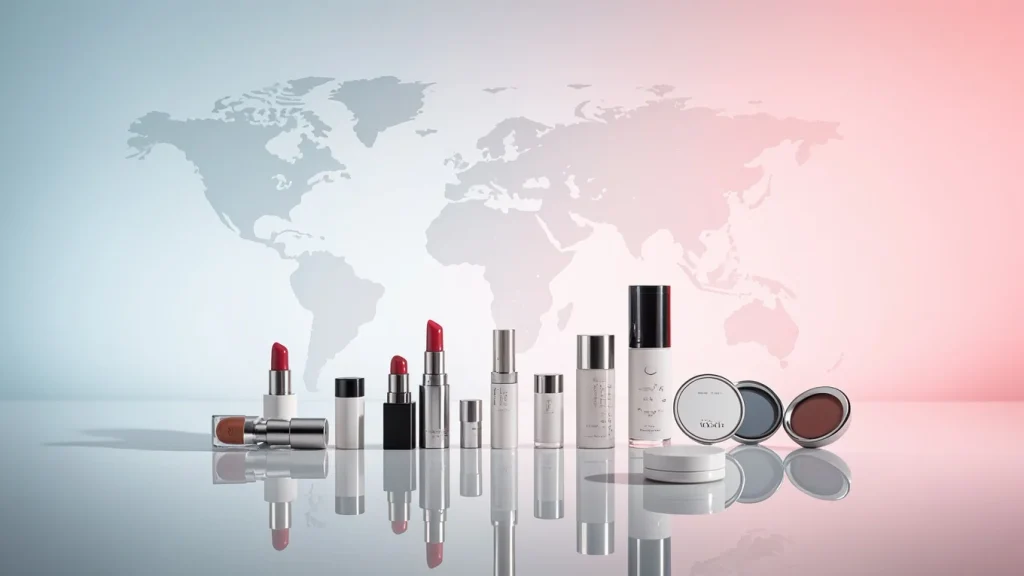
Three product lines, three checklists
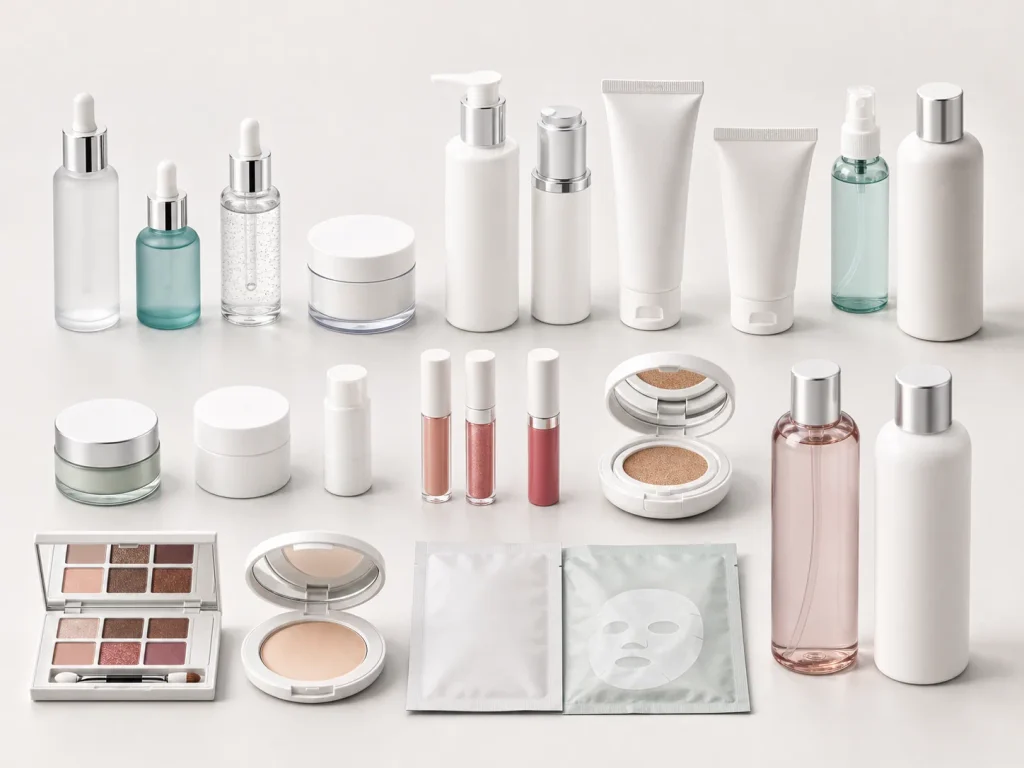
Skincare: serums, creams, emulsions, masks
These often arrive in glass with pumps or droppers. The pre-packing check covers container capacity and material, the seal or pump lock, glass separation and cushioning, and the per-case gross weight and volume. A leaking or broken bottle costs more than the cushioning that prevents it.
Makeup: lipstick, foundation, eyeshadow, powder
Pressed pans, mirrors, and powder compacts are fragile. They are cushioned against shock, kept flat where the formula demands it, and marked so handlers know a case holds breakables. Liquids such as foundation follow the same leak control as skincare.
Wholesale replenishment
Full cases, mixed SKUs, and several suppliers are listed by SKU so each case is traceable. That discipline is what lets a consolidated container stay organized from the China warehouse to the US delivery address.
Pre-packing confirmation, by line
- Container – capacity, glass or plastic, pump or dropper type.
- Seal – cap lock, crimp, or pump lock rated for transport.
- Cushioning – separation for glass, shock protection for powders and mirrors.
- Case label – mixed-SKU cases marked with their SKU breakdown.
- Weight and volume – per-case figures used for the booking.
For the physical packing steps themselves, the packing guide covers leak-proof methods and outer-carton marking in detail.
Wholesale and multi-SKU handling
When an order pulls from more than one factory, the SKUs are listed individually and each case is traced back to its line. That handoff is planned together with consolidation from multiple Chinese suppliers so the cargo is assembled in the right order before it sails. Alcohol-based or pressurized items are pulled out of the standard flow, because they follow the restricted-item path described in the perfume and aerosol guide.

What to send for a quote
A useful skincare or makeup quote starts with the product type, container material and capacity, liquid or powder form, per-case gross weight and volume, the China pickup city, and the US delivery ZIP. The more precise the SKU table, the closer the quote is to the real cost. Note the responsibility boundary too: glass breakage in transit is handled under the shipment terms, while damage from a faulty seal at the factory is a separate issue, so confirm the seal before it is cased. When the SKU table and case weights are ready, request a quote so the booking reflects the real cargo and routing.
Frequently asked questions
Can you ship glass skincare bottles from China to the USA?
Yes, with the right packing. Glass bottles need separation, cushioning, and sealed caps or pump locks so they do not shift or leak in a consolidated container. Confirm the per-case weight and volume so the booking matches the real cargo.
How are makeup and pressed powders packed for shipping?
Pressed powders, eyeshadow pans, and items with mirrors are fragile. They are cushioned against shock, kept flat where the formula demands it, and labeled so handlers know a case holds breakables. Mixed makeup orders are listed by SKU for traceability.
Do you handle wholesale and multi-SKU cosmetics shipments?
Yes. Multiple SKUs from one or several suppliers are consolidated, with each case listed and traceable back to its SKU. That keeps the container organized from the China warehouse to the US delivery address.
What information do I need to quote a skincare shipment?
Send the product type, container material and capacity, whether it is liquid or powder, per-case gross weight and volume, the China pickup city, and the US delivery ZIP. The more precise the SKU table, the more accurate the quote.
Are alcohol-based skincare products treated differently?
If the formula is alcohol-based or pressurized, it follows the restricted-item rules rather than general cargo. Perfume and alcohol items are reviewed separately, so keep them out of a standard skincare booking until they are cleared.
How cosmetics shipping from China to the USA works
Shipping cosmetics from China to the USA most often moves as LCL sea freight: your supplier’s goods are picked up or collected, consolidated into a shared container, sailed to a US port, and delivered to a warehouse or commercial address. The forwarder runs the transport; you own the product compliance. This guide covers how the shipment is built, what the carrier checks before a booking, and what to prepare so the cargo moves without surprises.
The cargo review: what gets checked before booking
A responsible booking starts with a cargo review, not a flat yes. Four things are confirmed:
- Product category – what the goods actually are, by formula and packaging.
- Written scope – exactly what the forwarder will and will not handle.
- Handover documents – the invoice, packing list, and any needed filings.
- US receiving conditions – the delivery address, appointment rules, and any access limits.
This step turns “can you ship it?” from a guess into a checked process. Items such as perfume, alcohol, and aerosols are reviewed on their own path because of flash point and pressure, not on the product name.
Routing by product type
Different cosmetics need different handling, so the routing splits by type:
- Skincare, makeup, personal care – general cargo once packed, planned through the skincare and makeup service.
- Perfume, alcohol-based, aerosols – a separate restricted-item review with documents and packing rules.
- Mixed or wholesale orders – consolidated from several suppliers before the container is built.
The split exists because a glass serum and a pressurized hairspray do not share one packing method, and the carrier needs to know which is which before space is confirmed.
What to prepare before you request a quote
- The product name and a short description.
- Any ingredient notes that affect transport (alcohol content, pressurization).
- Per-case dimensions and weight, and the total volume.
- The China pickup city and the US delivery ZIP.
- Whether the order pulls from one or several suppliers.
Compliance sits beside logistics: FDA rules for cosmetics imports cover MoCRA and labeling, which the importer handles before the goods sail. Getting both sides ready early is what keeps a booking on schedule.
What a freight forwarder does and does not do
The forwarder books space, consolidates cargo, manages the ocean leg, and helps with the shipment paperwork. It does not replace the importer’s responsibility for product formulation, labeling, or US regulatory clearance, and it does not act as the Responsible Person. That boundary is stated up front so expectations stay realistic. Good packing still decides whether the goods arrive intact.
Frequently asked questions
How do you ship cosmetics from China to the USA?
Most cosmetic shipments move as LCL sea freight. Goods are picked up or collected from the supplier, consolidated into a shared container, sailed to a US port, and delivered to a warehouse or commercial address. The forwarder manages the transport; the importer handles product compliance.
What does a freight forwarder check before booking cosmetics?
The carrier reviews the product category, the written scope of what it will handle, the handover documents, and the US receiving conditions. Items such as perfume, alcohol-based formulas, and aerosols are reviewed separately because of their flammable or pressurized nature.
Can a freight forwarder handle my FDA registration?
No. Facility registration, product listing, and the US Responsible Person are the importer’s compliance tasks under MoCRA. A forwarder arranges the booking and cargo handling, not the regulatory filings.
How should I route skincare, makeup, and restricted items?
Skincare, makeup, and personal care move as general cargo once packed. Perfume, alcohol-based cosmetics, and aerosols follow a separate restricted-item review, so they are planned on their own path rather than mixed into a standard booking.
What information do I need to request a quote?
Prepare the product name, any ingredient notes that affect transport, per-case dimensions and weight, the China pickup city, and the US delivery ZIP. The more precise the details, the more accurate the quote and the fewer surprises at the terminal.
Does the forwarder take responsibility for product compliance?
No. The forwarder does not replace the importer’s responsibility for product formulation, labeling, or US regulatory clearance. Its role is to move compliant cargo safely and document the shipment correctly.
1. Identify the products before choosing freight
List the product names, forms and intended use. Include packaging photos and note alcohol content, aerosols or other relevant characteristics. A liquid, powder or cream description alone is not enough to confirm cargo acceptance.
2. Measure the shipment as packed
Request carton count, dimensions, total gross weight and cubic volume from your supplier. Include pallets in the measurements when they will travel with the goods. Mark estimates clearly and update them before booking.
3. Confirm the service you need in China
Choose supplier drop-off or ask about pickup. If several suppliers are involved, provide their locations and readiness dates. Agree on consolidation, reinforcement, palletising or labelling before the goods arrive.
4. Review the US entry and delivery arrangements
Identify who will supply import information and coordinate clearance. Share the final US ZIP code, address type, warehouse rules and unloading conditions. A freight plan should clearly state the parties’ responsibilities.
5. Compare the complete freight quote
Review origin handling, sea freight, destination handling, tax responsibilities and final delivery. Confirm the validity and the start and end points of any transit estimate. Keep the approved scope in writing.
6. Update documents before dispatch
Make sure the invoice, packing list, cargo details and receiving instructions match the final shipment. Report changes in product, quantity, packaging or address before the shipping arrangement is finalised.
Plan your next step
Explore our LCL sea freight service. For a shipment review, prepare your product details, packed weight and volume, China pickup location and US ZIP code.
Documents to prepare before the booking
Collect the commercial invoice and packing list while the goods are still at the supplier. The invoice should describe each product the way it appears on the label, state quantities, and use the same names across every document. The packing list should match the cartons exactly: carton numbers, contents per carton, dimensions, and gross weight. Keep both consistent with the purchase order so that any later check at origin or destination starts from a single set of facts.
Packing that survives the journey
Sea freight involves stacking, vibration and temperature changes, so the way cartons are packed matters as much as the product itself. Ask the supplier to cushion bottles and jars, separate fragile items, and close containers so that nothing can leak onto other cartons. Outer cartons should be strong enough for stacking, and pallets, if used, should be stable and clearly labelled. A well-prepared shipment moves through origin handling, consolidation and customs checks with fewer surprises.
What a freight quote should show you
When you request a quote, compare more than the total figure. Look at the charging basis, the pickup and delivery scope, the charges included on each side of the ocean, and the validity of the quotation. A quote built on estimated sizes can change once final packed measurements arrive, so keep the cargo details in the checklist updated before booking. See What Is Included in a Cosmetics Freight Quote? for a full breakdown of the line items.
Common mistakes that slow down a booking
Most delays come from incomplete product information, mismatched documents, or measurements that do not reflect the packed shipment. Product names that change between the invoice and the packing list cause extra questions. Alcohol content, aerosols and pump or spray containers that are not mentioned at the start require a separate assessment later. Provide everything in one pass: product details, photos, packed measurements, supplier locations and readiness dates, and the US receiving address. That single file of information is what the freight team uses to build a workable plan.
Checklist summary
- Product names, forms, intended use, packaging photos, alcohol and aerosol notes
- Carton count, dimensions, gross weight, cubic volume, pallet details
- China supplier locations and readiness dates, drop-off or pickup
- Commercial invoice and packing list matching the purchase order
- US receiving address, warehouse name, contact, receiving rules
- Updated measurements before booking, and a clear scope for the quote
When to start each step
Start the checklist at the purchase order stage, confirm product details and packing as production finishes, and freeze the final measurements a few days before the booking. Supplier readiness dates should be shared as soon as they are known so that pickup and consolidation can be scheduled around them. This sequence keeps every detail current: the quote is built on real data, the booking is not delayed by missing information, and the documents match the cargo that actually sails.
Frequently asked questions
When should I prepare these details? Start the checklist when the purchase order is placed, and update it as production and packing progress. Final measurements should be confirmed before booking.
Why does the product description matter so much? Liquids, powders, creams, aerosols and alcohol-containing products are assessed differently. An accurate description prevents delays at origin review and during US entry.
What if several suppliers are involved? Provide locations and readiness dates for each supplier, and keep each supplier’s cartons identifiable, as described in Consolidating Cosmetics from Multiple Chinese Suppliers.
Can I prepare the US side now too? Yes. The receiving address and any warehouse instructions can be added while the cargo is being packed, so the origin and destination plans are ready at the same time.
Prepare a freight enquiryCan liquid cosmetics be shipped by sea?
Sea freight may be considered after review of the actual product, packaging and applicable transport conditions. Do not assume all liquids are treated the same. Perfume, aerosols and alcohol-containing products need a separate assessment; provide safety information when requested.
Check the primary container
Ask the supplier to verify closures, seals and pump locks. Provide the capacity and material of each container, and identify any glass bottles. Confirm that the packaging is suitable for normal handling and the proposed journey.
Separate fragile items and contain leaks
Describe how containers are cushioned and separated inside cartons. Agree on leak protection appropriate to the product and shipment. A cosmetic retail box should not be treated as a complete shipping pack without review.
Record carton and pallet measurements
Give the packed gross weight and outer dimensions, including any pallet. Overloaded cartons or unsuitable stacking can create handling problems. The shipping team and receiving warehouse may have different requirements, so confirm both.
Keep photos with the packing list
Photograph the retail pack, internal protection, sealed carton and completed pallet where applicable. These details help the team review the proposed packing work and identify any additional operations before collection.
Plan your next step
Check product shipping considerations. For a shipment review, prepare your product details, packed weight and volume, China pickup location and US ZIP code.
How cartons are prepared for sea freight
Sea freight places different demands on packaging than local delivery. Cartons are stacked in containers, moved by forklift, and can face humidity changes during the voyage. Ask the supplier to use cartons strong enough for stacking, keep cushioning material inside the box rather than relying on air, and avoid overpacking, which makes cartons bulge and tear. Products that are heavy or sharp-edged should sit at the bottom of the carton, with lighter items above them.
Labels and markings on outer cartons
Outer cartons should show a clear shipping mark with the consignee reference and a carton number, for example carton 1 of 10. This lets the receiving team and the consolidation point match cartons to the packing list without opening them. Fragile items can carry a handling mark, but keep the marking simple and accurate. Aerosols or alcohol-containing products must follow the transport conditions that apply to them, including any required safety information, so confirm those requirements with the supplier before cartons are sealed.
Special attention for perfume, aerosols and alcohol
Perfume, aerosols and products containing alcohol are assessed separately from other liquids. They may need safety data sheets, specific packaging standards, and different transport conditions. Do not combine them with ordinary cosmetics in one description. Give the supplier clear instructions to identify these products at the packing stage, because they affect both origin acceptance and the documents prepared for the shipment.
Leakage and spill protection
Containers with pump mechanisms, flip caps or thin walls need extra protection. Ask the supplier to test closures, seal bottles individually, and use absorbent material inside the carton as a second line of defence. Separate bottles from each other so they cannot knock together, and keep any glass containers wrapped. A carton that stays dry on arrival saves time during receiving checks and avoids damage claims for the rest of the cargo.
When packing services help
If your suppliers pack inconsistently or you are combining goods from several factories, a packing or consolidation service can standardise the work: counting cartons, checking contents, reinforcing packaging, palletising and labelling before the shipment moves on. Compare the scope in Consolidating Cosmetics from Multiple Chinese Suppliers and ask what is included before dispatch.
Checking the shipment before it leaves the factory
Before the goods are released from the factory, run a short check: cartons are intact, contents match the packing list, labels carry the shipping mark and carton number, and any aerosols or alcohol-containing items are identified with the information requested for transport. Photograph the closed cartons and, where relevant, the product packaging. These simple records make the later steps easier, whether the cargo goes to a consolidation point or straight to the port.
Frequently asked questions
Can all liquid cosmetics travel in the same way? No. Products are reviewed case by case. Perfume, aerosols and alcohol-containing items are assessed separately and may require additional information.
Who checks the packaging? The supplier packs the goods; the freight team reviews the description and may ask for photos or safety information before confirming acceptance.
Is a visual check a quality test? No. Counting cartons and checking labels at origin is not a laboratory test or a product-quality inspection. It confirms the shipment is as described, not that the products are defect-free.
Do I need special packaging for a short sea journey? The voyage is only one part of the trip. Origin handling, consolidation, customs checks and final delivery all affect the cartons, so pack for the whole journey.
Prepare a freight enquiryCreate a supplier-by-supplier cargo list
Record product names, purchase order references, quantities, carton counts and expected readiness dates. Keep each supplier’s cartons traceable even when the goods will move together.
Confirm receiving and collection arrangements
Provide each supplier’s location and whether they will deliver or need pickup. Agree on the receiving instructions and cargo identification before dispatch to the consolidation point.
Specify the warehouse work
Clarify whether the scope includes carton-count checks, consolidation, reinforcement, palletising or relabelling. A visual or quantity check is not a laboratory test or a product-quality inspection.
Check the final combined shipment
After agreed handling, confirm the actual packed dimensions and weight. Update the packing list so it describes the outgoing shipment rather than the suppliers’ original estimates.
Allow for different readiness dates
If one supplier is late, discuss whether the shipping plan should wait, split or change. Confirm any resulting costs and schedule changes before making the decision.
Plan your next step
See supplier collection and consolidation. For a shipment review, prepare your product details, packed weight and volume, China pickup location and US ZIP code.
How consolidation works, step by step
Consolidation brings goods from several Chinese suppliers into one shipment. The typical sequence is: suppliers deliver or are collected at the consolidation point; cartons are counted and matched to each supplier’s packing list; cargo is organised into one export unit; reinforcement and palletising happen if they are part of the scope; and the consolidated shipment is booked for ocean freight as a single LCL consignment. Each step produces or updates a document, which is why clear cargo lists matter from the start.
Keeping each supplier traceable
When goods from different factories travel together, every carton should carry a reference that links it to its supplier and purchase order. A simple mark with the supplier code, PO number and carton number is enough. The consolidation point uses these references to build the packing list of the combined shipment, and the US receiving team uses the same references to check the arrival. Traceability also makes it easier to answer questions from customs or the destination warehouse without opening every carton.
Reinforcement, palletising and relabelling
Reinforcement means adding straps, shrink wrap or stronger packaging where cartons may be weak or heavy. Palletising builds stable pallet loads that move through the container and the destination warehouse more safely. Relabelling replaces or corrects marks on cartons, for example when a supplier’s mark does not match the consignee reference. Each of these is a defined task: agree in writing whether they are included in the service or billed separately, and confirm the quantities covered.
Drop-off or pickup: what changes
Supplier drop-off means the factory delivers to the consolidation point at an agreed time. Pickup means the consolidation point or freight team collects the goods. The choice affects scheduling, vehicle requirements and origin charges. For multiple suppliers, provide each location and readiness date so that pickups can be planned in one route. The same information also feeds the freight quote, so keep it consistent with the details you give for the booking.
Checks at the consolidation point
Consolidation normally includes a quantity and visual check: cartons are counted and matched to the cargo list, and obvious damage is noted. This is not a laboratory test or a product-quality inspection. If you need quality checks, weight verification or sampling, define them separately in the scope before the goods arrive. Clear expectations at this stage avoid disputes about what was checked and what was not.
Cut-off times and sailing schedules
Consolidation has its own calendar. Cargo usually needs to be at the consolidation point before a cut-off time so that it can be counted, packed and loaded in time for the scheduled sailing. Ask for the cut-off date when you plan the booking, work back from it to set supplier readiness dates, and tell each supplier the latest arrival time they can meet. A late delivery at the consolidation point can push the whole shipment to the next sailing.
Frequently asked questions
Do I lose track of my goods when they are consolidated? No, provided cartons carry supplier and PO references. The consolidated packing list keeps every carton traceable through the shipment.
Can consolidation reduce my freight cost? Consolidation allows several suppliers’ cargo to share one LCL shipment and one set of origin and destination charges. The saving depends on the volumes and the individual quotes, which is why comparing the full charge breakdown in What Is Included in a Cosmetics Freight Quote? helps.
When should suppliers deliver? Confirm receiving hours and appointment requirements at the consolidation point, then agree readiness dates with each supplier so the whole cargo is available for the planned sailing.
What happens to fragile or liquid cargo in consolidation? It is handled with the same packing rules as any sea shipment. Fragile items should be cushioned and separated, and liquids sealed properly before they reach the consolidation point, as covered in Shipping Liquid Cosmetics and Creams from China.
Prepare a freight enquiryProvide the exact receiving address
Share the complete address, ZIP code, warehouse name and receiving contact. A city name alone is not enough to confirm final-delivery arrangements.
Check the receiving rules
Request carton labels, pallet specifications, shipment references and inbound instructions from the warehouse. Ask about any product restrictions that the receiving facility applies.
Confirm appointments and unloading
Tell the shipping team about receiving hours, appointment requirements, dock access and unloading equipment. These conditions can affect vehicle selection and delivery charges.
For Amazon FBA or another designated facility
Share the current shipment-specific receiving instructions. Delivery to a named facility must be confirmed separately; this site does not imply automatic approval, platform affiliation or an integration with its systems.
Agree on the handover and exception process
Check what delivery confirmation will be available and how waiting time, rejected deliveries or rebooking will be handled under the agreed scope. Address changes should be reported as early as possible.
Plan your next step
Review receiving information requirements. For a shipment review, prepare your product details, packed weight and volume, China pickup location and US ZIP code.
Door-to-door and door-to-port delivery
Delivery from the destination port to the final US address can be arranged as part of the freight service or separately. Door-to-door covers the full move through destination processing and inland transport, while door-to-port ends at the port or terminal, leaving the receiving side to arrange collection or a domestic carrier. The right choice depends on the receiving facility: a 3PL warehouse with a dock appointment is straightforward for door delivery, while a small office or a drop location may be simpler as a port pick-up. State the choice when you request the quote so the scope is clear from the start.
What US warehouses and 3PLs expect
Warehouses, fulfilment centres and third-party logistics providers each have their own receiving rules. Common requirements include a confirmed delivery appointment, carton labels that match the inbound instruction, pallet specifications, and a shipment reference that lets the receiving team find the arrival in their system. Some facilities restrict certain products or require specific handling for liquids. Ask for the current receiving instructions before dispatch, because rules can change between shipments and the freight team needs them before the cargo leaves China.
Customs clearance before inland delivery
Inland delivery happens after the entry has been processed. For imported cosmetics, applicable US requirements must be met before the goods move on, and admission is not guaranteed by a freight booking alone. Keep the commercial invoice, packing list and product descriptions accurate and consistent, as described in US Import Documents for Cosmetics Shipped from China, so that clearance and the final delivery leg are not delayed by missing or conflicting information.
Amazon FBA and designated facilities
Amazon FBA and similar designated facilities apply strict receiving instructions: a valid shipping plan, correct carton labels, barcodes on every box, pallet and truck requirements, and an arrival window. Share the current shipment-specific instructions with the freight team before departure, and confirm which tasks, such as labelling, palletising or freight prep, are included in the service scope. Getting these details right at origin prevents refusals and extra handling at the destination.
How delivery affects the quote
The delivery leg appears in the quote as destination charges, delivery fees or inland transport. The amount depends on the distance from the port, the receiving rules, the appointment requirements and the vehicle needed. Compare the destination side of quotations carefully, as described in What Is Included in a Cosmetics Freight Quote?, and confirm whether unloading and dock access are included.
Questions to ask the receiving facility
Before dispatch, confirm the receiving rules directly with the warehouse or fulfilment centre: exact address and contact, receiving hours, appointment requirements, carton and pallet specifications, label or barcode requirements, any product restrictions, and any receiving fees. For Amazon FBA, also confirm the current shipment-specific instructions. Written answers give the freight team everything they need to plan the delivery leg without last-minute surprises.
Delivery details are part of the freight plan from the first quote, not an afterthought. Sharing the receiving address, the facility rules and the appointment requirements early means the destination leg is costed accurately and the arrival is smooth.
Frequently asked questions
Can I change the receiving address after booking? Delivery is planned around the receiving address. Changing it may affect inland transport, appointments and charges, so confirm the final address before the cargo sails.
Do warehouses charge for receiving? Many facilities apply receiving or appointment fees. Ask the warehouse directly and include them in your comparison, because they are separate from the freight quote.
What if my goods go to several destinations? A consolidated shipment normally delivers to one address. Multiple destinations should be planned separately, with the receiving details provided for each location.
Is delivery included in door-to-door? Door-to-door includes the final delivery leg by definition, but confirm the exact scope, including unloading and any facility charges, before booking.
Prepare a freight enquiryStart with the charging basis
Check the packed weight and volume used, minimum charges, currency and quote validity. Do not compare an estimated cargo size against another quotation based on final measurements.
Separate origin, ocean and destination charges
Review pickup, origin handling, packing work, LCL sea freight, destination processing and final delivery as distinct items. Ask which charges are included and which may be billed separately.
Clarify import and tax responsibilities
Where clearance or taxes are mentioned, identify the responsible party and the exact scope. A door-to-door description is not enough to determine the allocation of duties or other import costs.
Check delivery conditions
A warehouse with a dock can have different delivery requirements from a commercial address needing unloading assistance. Compare quotes using the same ZIP code, appointment and unloading assumptions.
Understand when the quote needs revision
Changes in product characteristics, volume, packing, destination or readiness date can alter the plan. Reconfirm the quote after material changes, rather than relying on an earlier estimate.
Plan your next step
Review shipping costs and transit stages. For a shipment review, prepare your product details, packed weight and volume, China pickup location and US ZIP code.
What an LCL quote usually includes
For LCL cosmetics cargo, a quote typically covers the origin work in China, the ocean leg, and the destination work in the United States. Origin items can include pickup, handling at the consolidation point, packing services and export documentation. The ocean leg is the LCL sea freight charge. Destination items can include terminal handling, processing at the destination port, and final delivery or inland transport. Read the quote line by line and ask which tasks sit on each side of the ocean.
Charges that are often billed separately
Some costs appear outside the main quote and are billed separately when they occur. Common examples are facility receiving fees, charges for extra packing or relabelling, demurrage or storage if cargo is held, and duties or taxes that apply to the entry. Ask which items are included, which are estimated, and which are paid directly to a third party. A single total without a breakdown makes it hard to compare quotations or to plan the final landed cost.
Currency, validity and why quotes change
Sea freight rates move with space availability, season and fuel costs, so a quote has a validity period. Confirm the currency, the validity date, and the basis of the charges: an estimate built on preliminary cargo sizes will be reissued once the final packed measurements are known. Keep the cargo details updated and book within the validity window to avoid re-quoting on different terms.
How to compare quotes fairly
Compare quotations on the same cargo basis and the same scope. Check that each quote uses the same packed weight and volume, the same origin and destination points, and the same service level. Separate the origin, ocean and destination items side by side so differences become visible. Ask each freight team to explain any line that does not match. This method is more reliable than comparing two totals built on different assumptions.
Import duties, taxes and who pays
US entry may involve duties and other import costs, and the quote should state who is responsible for them. A door-to-door description alone does not allocate these costs. Confirm with the freight or customs team whether duties are quoted, estimated, or excluded, and who pays them, as part of the booking terms. The same applies to any fees raised by the customs broker or the receiving facility during entry.
How to read the quote line by line
When a quotation arrives, check the header first: the cargo description, the packed measurements, the origin and destination points, and the validity date. Then walk through the line items from origin to destination and mark each as included, estimated or billed separately. Note the currency and any minimum charges, and confirm which party handles duties and other import costs. A quote read this way tells you exactly what will happen to the shipment and what can change before departure.
Frequently asked questions
Why are quotes for the same cargo different? Quotes can differ on scope, service level, assumptions about the cargo, and the validity or currency applied. Comparing the line items on an identical cargo basis shows the real differences.
Is the total in the quote the final price? The quoted total covers the described scope. Costs that are billed separately, such as duties, facility fees or storage, are added when they occur.
How do I get an accurate quote? Prepare the product details, packed measurements, supplier locations and the US receiving address before requesting a quote. See How to Ship Cosmetics from China to the USA for the full checklist.
Does consolidation change the quote? Consolidation adds origin work at the consolidation point and is normally itemised separately. The combined effect on your cost depends on your volumes, as covered in Consolidating Cosmetics from Multiple Chinese Suppliers.
Prepare a freight enquiryPrepare the shipment records
Have a commercial invoice, packing list, shipper and consignee details, and accurate product descriptions available for review. The parties handling entry may request further information based on the goods and import arrangements.
Keep product descriptions accurate
List each product and quantity consistently. Intended use and claims can affect how a product is regulated in the United States; a cosmetics trade description does not resolve every classification question.
Review applicable FDA requirements
Imported cosmetics must meet applicable US requirements. FDA may examine or sample imported products, and admission is not guaranteed by a freight booking. Resolve product and labelling questions with the responsible parties before the goods leave China.
Keep MoCRA obligations separate from freight
Where facility registration or product listing obligations apply, they must be addressed by the relevant parties. Registration or listing does not represent FDA product approval. This shipping guide does not offer registration or listing services.
Agree on the document handover
Identify who supplies each record and who coordinates entry. Update the documents if products, quantities or shipment arrangements change, and allow for requests for additional information during import processing.
Official sources: FDA Cosmetics Importers; FDA Registration and Listing. Regulatory references reviewed September 23, 2026.
Plan your next step
Use the shipment document checklist. For a shipment review, prepare your product details, packed weight and volume, China pickup location and US ZIP code.
The document set for a US entry
When cosmetics arrive in the United States, the entry is supported by a set of records rather than a single paper. The commercial invoice, packing list, transport documents and the shipment details together describe what is arriving, who is sending it, and who is receiving it. Keep the names of products identical across these documents, and make sure quantities match between the packing list and the invoice. The parties handling entry may request further information based on the goods, the consignee and the import arrangements.
ISF and FDA prior notice
Two filings can apply to a US-bound ocean shipment and need preparation before arrival. The Importer Security Filing, commonly called ISF, is filed before the vessel departs and covers the parties and cargo details. For cosmetics, an FDA prior notice must also be submitted before the shipment arrives, so that FDA knows what is coming and where to focus examination. These filings depend on accurate shipment records, which is why the invoice, packing list and transport details need to be finalised early rather than corrected mid-voyage.
Product descriptions and US regulation
How a product is described affects how it is regulated in the United States. Cosmetics, and products with a therapeutic claim, can be treated differently. Intended use and claims therefore matter: a trade description alone does not resolve every classification question. Describe each product by its form, ingredients and intended use, and avoid promotional claims in shipping documents. When in doubt, flag the product for review before booking rather than during customs clearance.
Working with a customs broker
Most importers work with a customs broker who submits the entry and coordinates with FDA and other agencies. The broker needs the shipment records, the product information and the receiving details. Provide the same accurate descriptions you used in the shipping documents, and confirm who files ISF and prior notice in your arrangement. A single, consistent set of facts makes the broker’s work faster and reduces the chance of holds or requests for more information.
What the freight team can and cannot do
The freight team organises the transport, the consolidation and the delivery, and coordinates with the parties handling entry. It does not guarantee customs admission: imported cosmetics must meet applicable US requirements, and FDA may examine or sample products at the border. Plan the shipment records, the product descriptions and the applicable filings with the freight and customs teams before departure, so that nothing waits until the cargo is already at the destination port.
Common holds and how to avoid them
Most holds start with information that does not line up: a product described differently on the invoice and the packing list, a missing or incomplete prior notice, quantities that do not match the transport documents, or a claim in the description that turns the product into a different regulatory category. Avoid them by finalising one consistent set of records, checking the descriptions for claims, and confirming the ISF and prior notice filings with the broker before the vessel departs.
Frequently asked questions
When should documents be finalised? Before the vessel departs. ISF is filed in advance of departure and prior notice is due before arrival, so the records should be complete when the cargo is booked.
Can I fix a description after departure? Corrections are possible but they trigger additional review and can slow the entry. Preparing accurate records at origin avoids that friction.
Who files ISF and prior notice? In most arrangements the customs broker files them. Confirm the split of responsibilities when you book, because it differs between freight teams and brokers.
Where can I learn about US cosmetics rules? Start with the receiving requirements in How to Ship Cosmetics from China to the USA, then confirm the current FDA requirements with the customs broker or the US agency directly for the specific products you ship.
Prepare a freight enquiry